
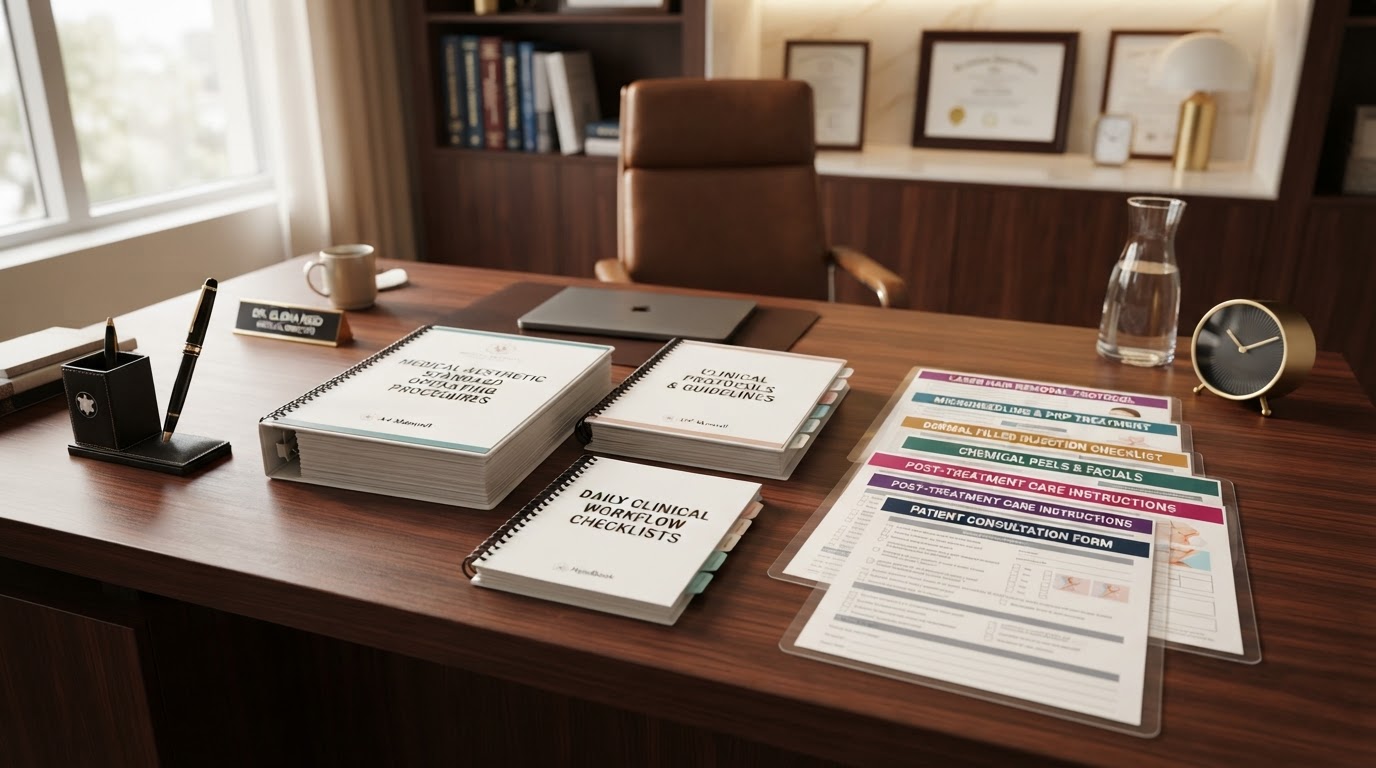
When most practice owners hear the word 'systems,' they picture a dusty 300-page binder sitting on a shelf that nobody has opened since 2021, or an overly complicated enterprise software system that takes six clicks just to log a syringe of Restylane.
That is not what a good system looks like. A real system is lean, clear, and practical. It is a documented set of rules and workflows that produces a consistent, high-standard outcome regardless of who is executing it.
Good systems make execution effortless for your team and invisible to your patients.
The anatomy of an effective med spa SOP
Every operational workflow in your practice, from how rooms are sanitized in the morning to how emergency complications are managed, should follow a consistent 5-part architecture:
- The 'Why' (Purpose): Why does this standard exist? (e.g., 'To ensure zero cross-contamination and guarantee our aesthetic treatment rooms are pristine within 7 minutes of patient departure.')
- The 'Who' (Accountability): A single role with clear ownership. Not 'the team,' but 'The Lead Clinical Assistant.'
- The 'When' (Trigger): Exactly when the action begins. (e.g., 'Immediately upon patient departure from Room 3.')
- The 'How' (Numbered Checklist): Clear, imperative action steps. Not a vague paragraph, but numbered items: 1. Discard disposable barriers. 2. Sanitize treatment chair with medical-grade disinfectant. 3. Restock 30G needles and alcohol wipes.
- The Exception Protocol: What to do when something goes wrong, without escalating to the owner.
The four critical operational systems every med spa must have
1. The Inbound Inquiry Conversion System
When an inquiry comes in via phone, website chat, or Instagram DM, your team must have an exact 4-step script. The standard response should acknowledge the inquiry within five minutes, validate their aesthetic goal, reframe conversation around safety and anatomy, and book a comprehensive consultation.
2. The Clinical Intake and Photography Protocol
Medical photography is not an afterthought; it is your primary defense against client dissatisfaction and your greatest marketing asset. A standard system specifies camera height, ring light intensity, neutral patient facial expression, background color, and where photos are securely archived in the electronic health record before any needle touches skin.
3. Inventory and Consumable Tracking
Carrying $40,000 in unused dermal fillers and neurotoxins on your shelves ties up critical cash flow. A real inventory system uses par levels, weekly physical cycle counts, and automated reorder points so you never run out of Xeomin on a busy Friday or order stock that sits for six months.
4. The Checkout and Rebooking Workflow
The final three minutes of a patient's visit dictate their lifetime value. The front desk must have an established protocol: review post-care instructions, verify loyalty rewards, schedule the 12-week refresh appointment, recommend the prescribed take-home skincare regimen, and present the payment terminal smoothly.
How to build your systems without spending months typing
You do not need to lock yourself in an office for six weekends to write SOPs. Use our Med Spa Operations & SOP Builder. It gives you proven medical aesthetic templates, guided decision prompts, and AI-assisted drafting so you can document what is in your head in a fraction of the time.